
How to activate 'ask mode' in investigations
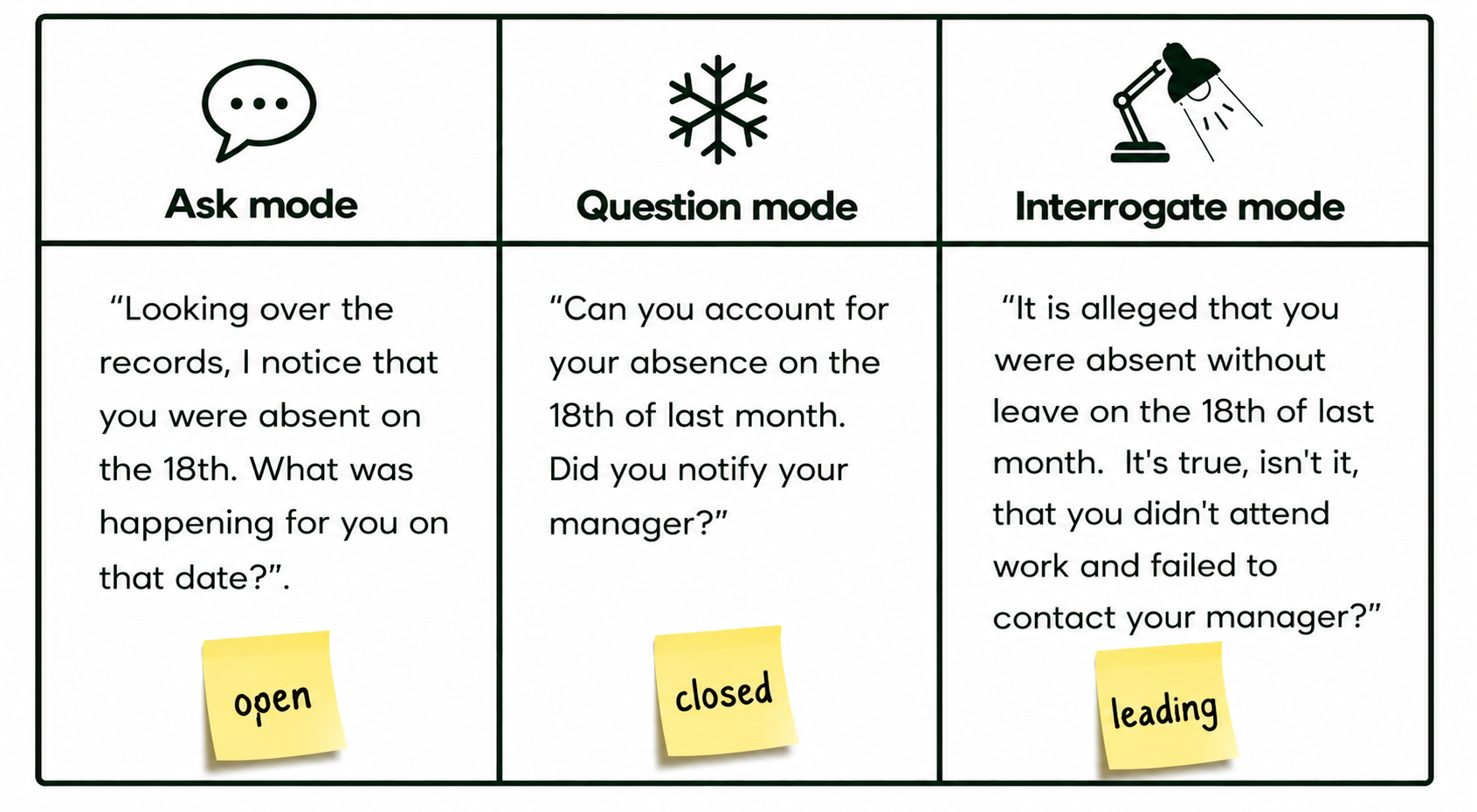
Interrogate, question, ask. Three words for the same activity, but each creates a totally different vibe in a workplace investigation.
Interrogate as the default mode?
Investigators feel the weight of expectation when asked to take on this role: They're investigating on behalf of their organisation, the process feels formal, and they know there could be consequences arising from what they've been asked to do. It's this weight of expectation that triggers the belief that 'interrogate' is the way to go.
A calm vibe creates a 'reasonable investigation'
The legal framework requires an employer to carry out a 'reasonable investigation'. That means a open-minded gathering in of all the reasonably available evidence.
When 'interrogation mode' is activated, it triggers 'fight or flight' in the interviewee - and how much listening or logical processing does anyone do when all that's going on?
And it's the 'fight or flight' that causes accusations of bullying, or bias, or 'it's all a foregone conclusion!' to start flying around - whether there's a basis for those accusations or otherwise.
How to activate 'ask mode'
Three steps shift an investigator's mindset, and the postive effect is remarkable. Not only for the interviewee and for the results of the investigation, but also for the investigator too - it takes the pressure right off and enables them ask questions in the way they naturally would. As a result they listen better and probe more effectively too.
One
Remove the weight of expectation off the investigator's shoulders.
Explain that it's not their role to prosecute. All that's needed is to gather the evidence that exists from what witnesses actually remember.
No 'ah-ha' moment is necessary for the investigation to have been done well!
Two
Explain the role of the investigation report in any follow-on process, particularly the need to understand any mitigating circumstances why something happened.
It brings alive the concept of a 'balanced' and 'open-minded' investigation: The need to create psychological safety becomes apparent.
Three
Demonstrate the effect of question types on the vibe of a conversation.
People managers spend a lot of time using 'closed' questions day to day.
It takes effort to switch to open questions, but see the difference and the switch happens.