
Topic spotlight
Preventing sexual harassment
Equip your people leaders with practical frameworks and relatable techniques to meet the proactive preventative duty with confidence and skill.
Please get in touch to discuss ways to equip your leaders to be ready for the new era of sexual harassment prevention.
A new era of sexual harassment prevention?
The Worker Protection Act ushered in the proactive duty to prevent sexual harassment. The changes in 2026 build a new era of expectation on organisations and its leaders. In this spotlight, we ask 4 questions to explore exactly what that means for employers:
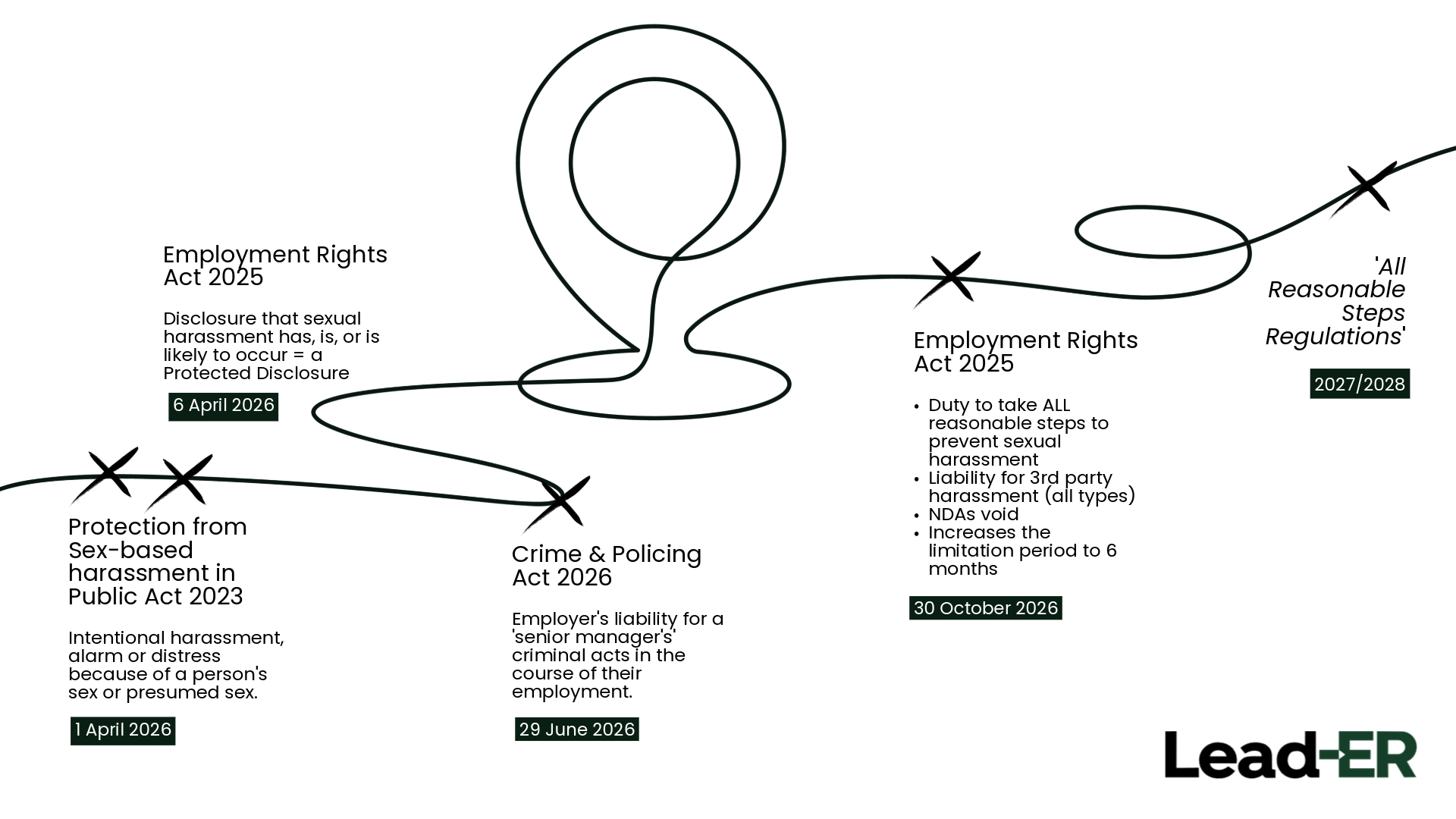
1. All reasonable steps. Is it down to our leaders to complete the picture?
2. Leaders don't need to be HR professionals, but has the 'know enough' threshold changed?
3. Is the drift towards more formal management?
4. Is the customer no longer 'always right'?
1. 'All reasonable steps'
Is it down to leaders to complete the picture?
Whilst we wait for the statutory guidance to tells us what 'all reasonable steps' to prevent looks like, we are piecing the picture together from sources such as the EHRC's technical guidance, ACAS and the legal framework relating to the defence available for employers against liability for their employers actions that they took 'all reasonable steps' to prevent it.
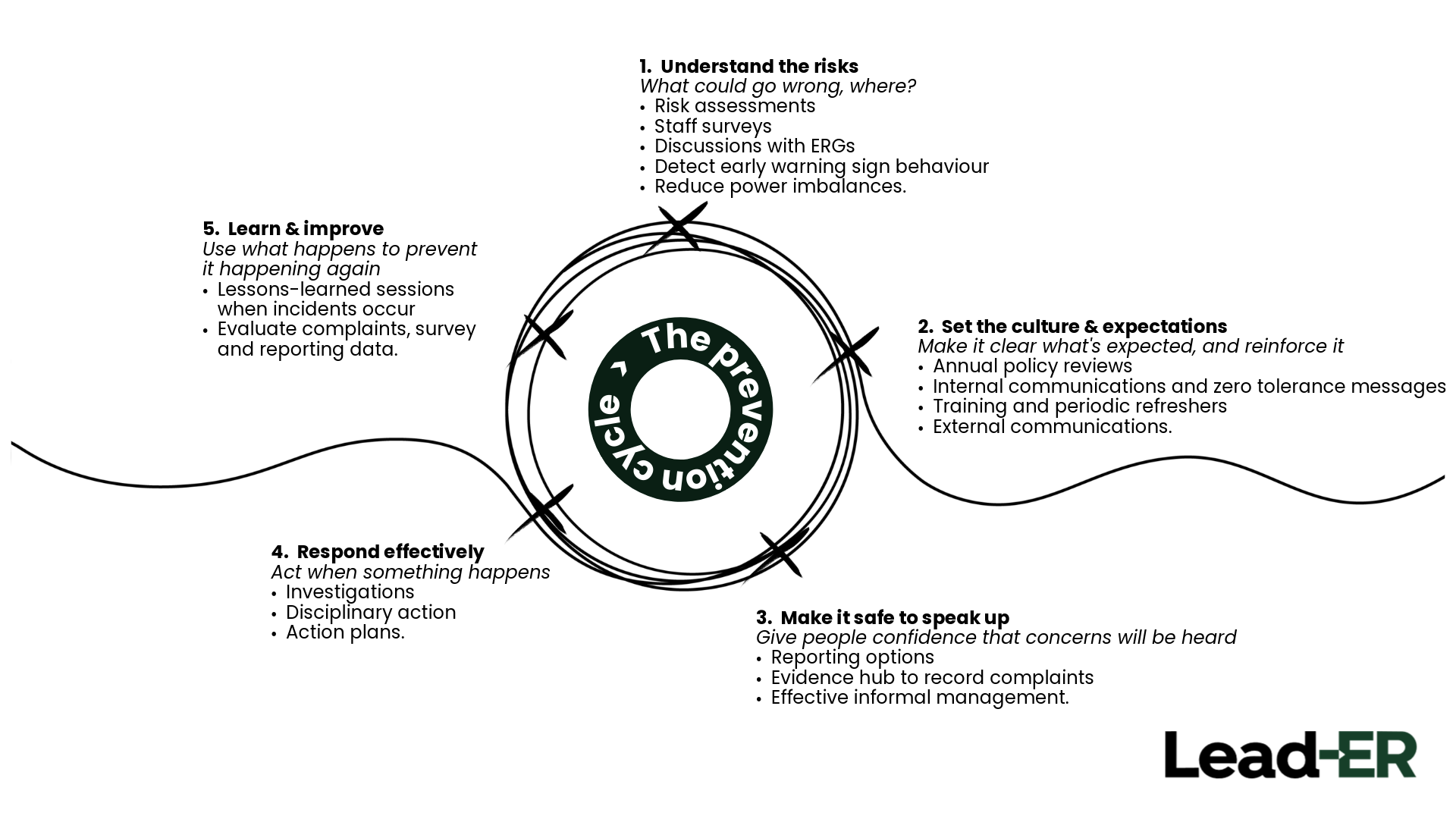
The steps outlined in EHRC's technical guidance, including a case study can be mapped to a cycle, as shown below.
'Effectiveness' of actions is an important feature in considering what's a 'reasonable' step. Would an 'effective' step be an employer to expect its leaders to engage with systems, demonstrate the required behaviours and apply the policy?
2. Leaders' knowledge of harassment
Does it need to expand?
The test of harassment is unchanged, but the circumstances in which harassment is occurring is becoming more complex.
Sexual harassment is not just about touching, attraction or innuendo or 'banter'. Behaviour linked to toxic masculinity and the incel subculture all create sexual harassment risks - and sexual harassment can be perpetrated by everyone, and everyone can experience it.
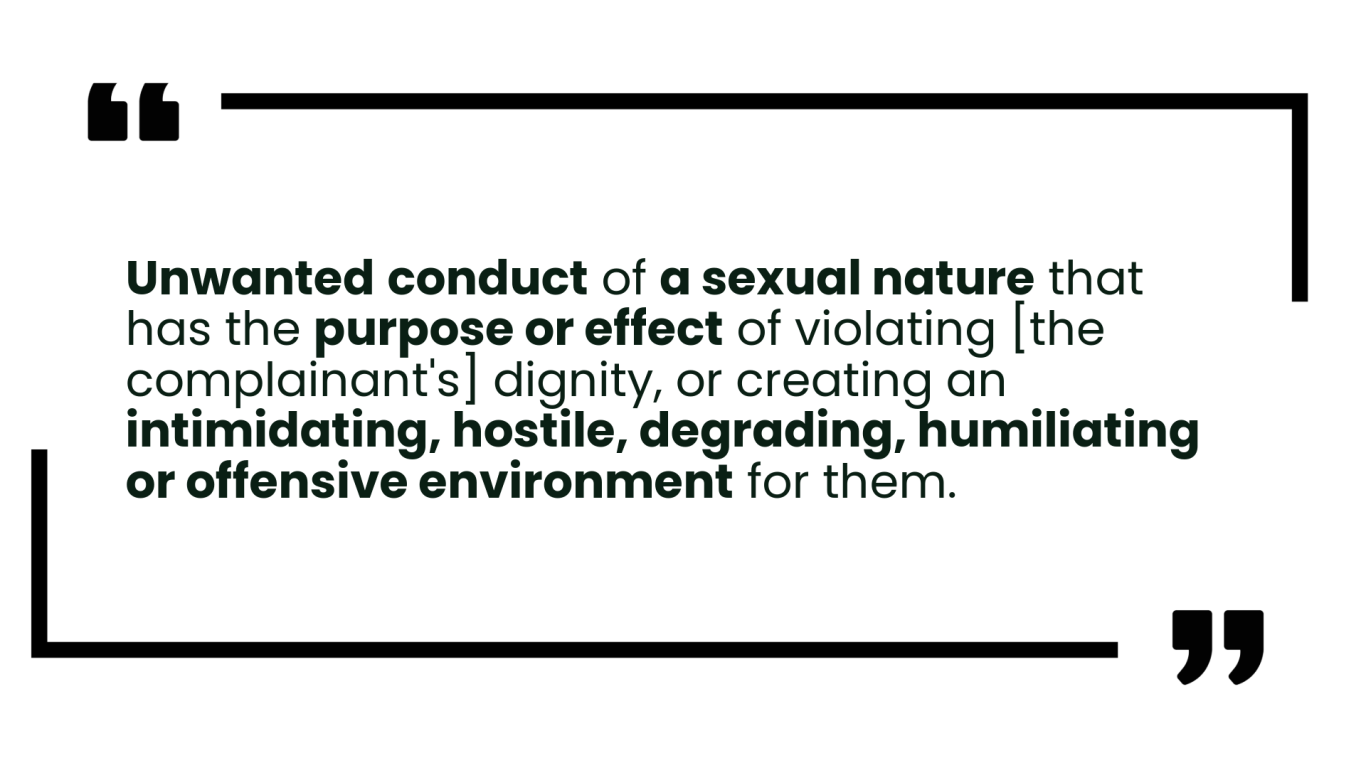
Would your leaders recognise that this could be sexual harassment?
3. Does this new era indicate a drift towards formal management?
If so, so what?
The legal framework points to the increasing importance of a paper trail to demonstrate both proactive and reactive steps to manage the legal and reputational risks:
- A disclosure that sexual harassment 'is likely to occur' (or has occurred, or is occurring) is a protected disclosure
- criminal liability for deliberate 'sex-based' harassment and employer liability for 'senior managers'' criminal conduct, irrespective of that employer's policy and governance framework;
- the duty to take all reasonable steps to prevent harassment.
Will this empower, or disempower, our leaders to take the all-important action to nip situations in the bud? How do employers encourage commitment to our systems and processes, rather than compliance?
- Awareness of their role setting a culture: Many leaders do not see themselves as 'culture setters', but exploring the shadow they cast can be an effective empowerment tool (as well as an eye-opener).
- Share the personal risks: Not to scare anyone, but to ensure they see that the systems and processes are for their personal benefit.
- Tell them you have their back, and if in doubt - act. Give them techniques to say 'that's not okay' and draw lines in the sand - and tell the stories of real cases to explore just how easily harassment could happen around here.
How to say 'that's not okay'!
How to draw a line in the sand.
4. Preventing harassment by third parties
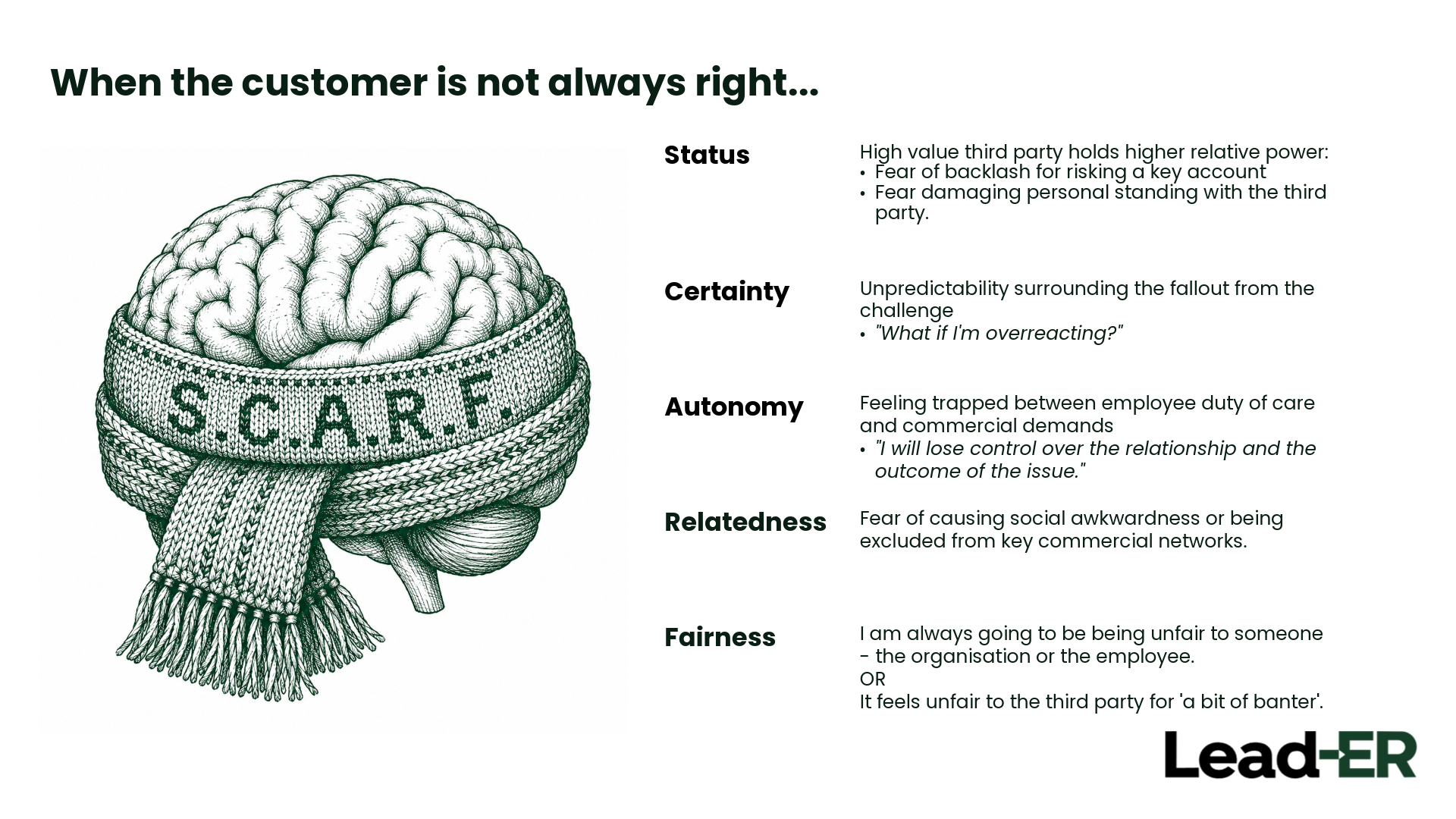
means our leaders need to re-evaluate their relationship with their external stakeholders
Using David Rock's SCARF model explaining our 'social needs' can be a relatable framework to identify the barriers to challenging important stakeholders' behaviour
More from us on this topic...


